
The short answer
Sunnyvale's milder summers mean a correctly sized, often smaller AC system usually beats a big one. We calculate your home's cooling load, check ducts and electrical capacity, and recommend central, ductless or heat pump options that fit how you live.
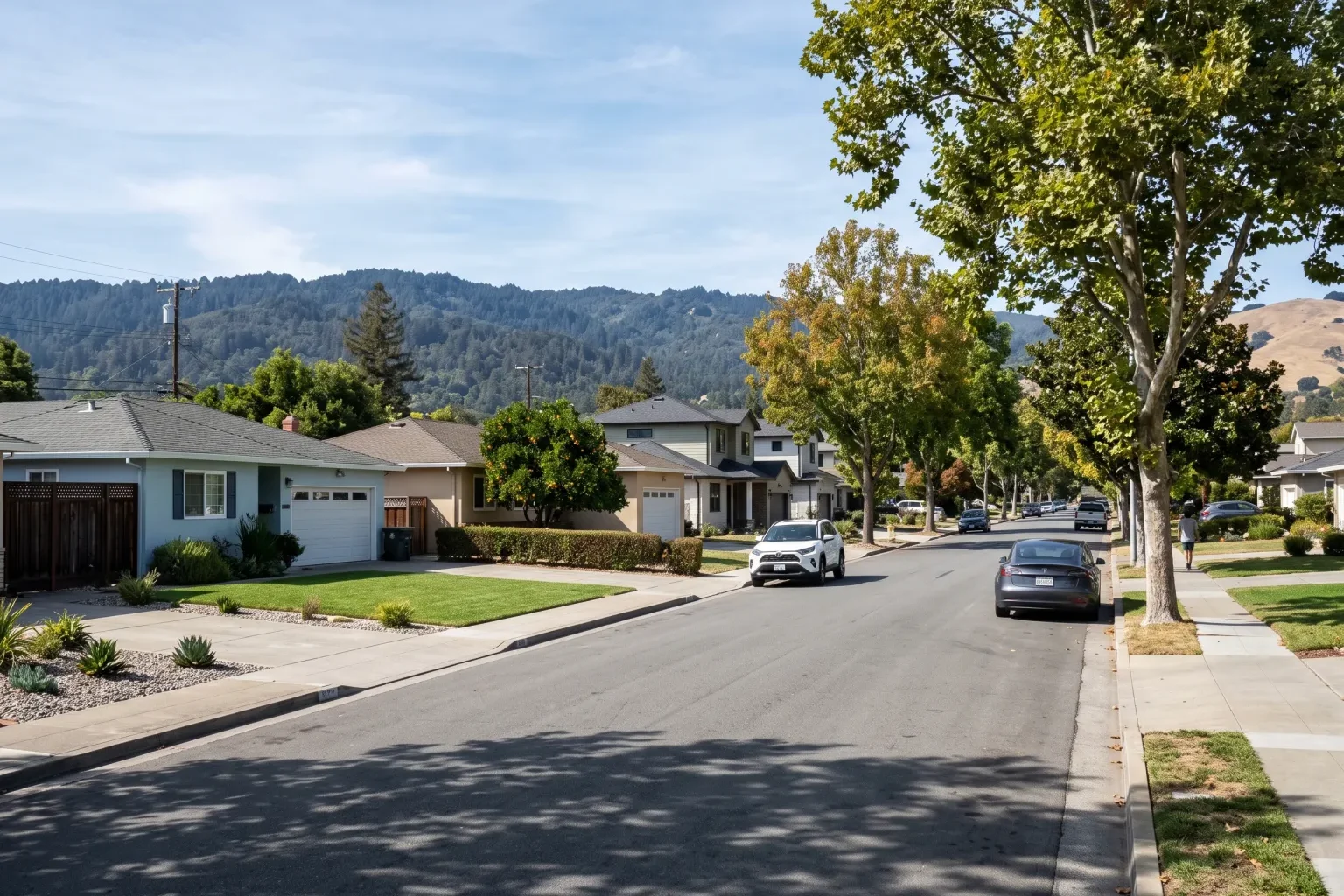
Sunnyvale sits close enough to the Bay that its summers are usually gentler than the southern end of the valley. For years that meant many households simply skipped central air. Then come the handful of hot weeks each year, a home office that bakes by mid-afternoon, or a second-floor bedroom that won't cool down overnight, and the question comes back. ReliableAir HVAC Services installs air conditioning across Sunnyvale's 94085, 94086, 94087 and 94089 ZIP codes, about five miles west of our San Jose base. Because summers here are moderate, the right system for a Sunnyvale home is often smaller, quieter and more efficient than what a hotter inland town would call for. That's the core of how we plan installs here, and the rest of this page explains the choices involved, from equipment type to placement on tight lots to the questions worth asking before you sign anything.
Right-Sizing for a Milder Microclimate
Near the Bay, cooling loads are lower than in the hotter inland and southern parts of the Santa Clara Valley. An installer who sizes by rule of thumb, or who simply matches the tonnage on an old unit, often ends up with a system that's too large. Oversized equipment reaches the setpoint quickly, cycles off, and repeats. The result is uneven temperatures, a sticky feel in the air, more wear on the compressor and higher operating costs.
We run a proper load calculation instead. It accounts for each room's size, ceiling height, window area and direction, insulation, air leakage and occupancy. For many Sunnyvale homes, that calculation points to a modest-capacity system, frequently a two-stage or variable-speed unit that can run gently most of the time and ramp up only on the hottest afternoons.
Choosing Between Central, Ductless and Heat Pump
Your home's existing setup narrows the options. Here's how the main choices usually play out in Sunnyvale:
- Central split AC: a good match when you have a gas furnace and ducts in good condition, adding an outdoor condenser and an indoor coil
- Ductless mini-split: suited to homes without ducts, single-story houses with limited attic room, or specific rooms that run hot
- Heat pump: installs like a central AC but also heats, worth comparing if your furnace is aging
- Mixed approach: central cooling for most of the house plus a ductless head for a hot upstairs room or converted garage
Ducts, Attics and Low-Slope Roofs
A lot of Sunnyvale housing dates from decades when ducts were designed for heating only. Cooling requires more airflow, so original ducts are sometimes too small or have leaks at their joints. Some single-story homes have shallow attics or low-slope roofs that leave little room for new duct runs. In those cases ductless equipment can avoid major construction.
During the estimate we inspect the duct system for leaks, damaged insulation, crushed flex sections and undersized returns. If repairs are needed, we explain them before recommending equipment, because a new unit can't outperform the ducts it's connected to.
Placing the Outdoor Unit on a Tight Lot
Side yards in many Sunnyvale neighborhoods are narrow, and houses sit fairly close together. Placement of the condenser affects airflow, noise for you and your neighbors, and ease of future service. We look for a spot with clearance on all sides, a level pad, and distance from bedroom windows on either property. We also confirm the electrical panel can support the new circuit and note any local setback requirements.
From Install to First Cool Evening
Most replacement installs take a single day; first-time installs and ductless systems with several heads may take longer. Our crew protects your floors, removes any old equipment, sets and connects the new system, and pressure-tests and vacuums the refrigerant lines before charging. Then we verify airflow and temperature split, set up the thermostat and show you how to maintain the filter.
If you're debating a heat pump, it's worth knowing that Bay Area Air District Rule 9-4 sets a zero-NOx standard for gas furnaces manufactured from 2029, pointing future replacements toward heat pumps. The rule doesn't require replacing working equipment. BayREN and your local clean energy provider may offer incentives, which we confirm before quoting.
More services in Sunnyvale
- AC Repair in Sunnyvale
- Heating Repair in Sunnyvale
- Heat Pump Installation in Sunnyvale
- Furnace Repair in Sunnyvale